| CVE |
Vendors |
Products |
Updated |
CVSS v3.1 |
| In BlueWave Checkmate before 2.1, an authenticated regular user can access sensitive application secrets via the /api/v1/settings endpoint. |
| WS-WN572HP3 V230525 was discovered to contain a buffer overflow in the component /www/cgi-bin/upload.cgi. This vulnerability allows attackers to cause a Denial of Service (DoS) via a crafted HTTP request. |
| Cross-Site Scripting (XSS) vulnerability was discovered in the Pichome system v2.1.0 and before. The vulnerability exists due to insufficient sanitization of user input in the login form. An attacker can inject malicious JavaScript code into the username or password fields during the login process |
| Cross-Site Request Forgery (CSRF) vulnerability in Tobias WP2LEADS allows Stored XSS.This issue affects WP2LEADS: from n/a through 3.5.0. |
| Missing authentication for critical function issue exists in I-O DATA network attached hard disk 'HDL-T Series' firmware Ver.1.21 and earlier. If exploited, a remote unauthenticated attacker may change the product settings. |
| mediDOK before 2.5.18.43 allows remote attackers to achieve remote code execution on a target system via deserialization of untrusted data. |
| Improper neutralization of special elements used in an OS command ('OS Command Injection') issue exists in I-O DATA network attached hard disk 'HDL-T Series' firmware Ver.1.21 and earlier when 'Remote Link3 function' is enabled. If exploited, a remote unauthenticated attacker may execute an arbitrary OS command. |
| The UiPress lite | Effortless custom dashboards, admin themes and pages plugin for WordPress is vulnerable to Remote Code Execution in all versions up to, and including, 3.5.07 via the uip_process_form_input() function. This is due to the function taking user supplied inputs to execute arbitrary functions with arbitrary data, and does not have any sort of capability check. This makes it possible for authenticated attackers, with Subscriber-level access and above, to execute arbitrary code on the server. |
| Information Exposure vulnerability in Hitachi JP1/IT Desktop Management 2 - Smart Device Manager on Windows.This issue affects JP1/IT Desktop Management 2 - Smart Device Manager: from 12-00 before 12-00-08, from 11-10 through 11-10-08, from 11-00 through 11-00-05, from 10-50 through 10-50-06. |
| Weak encryption vulnerability in Hitachi JP1/IT Desktop Management 2 - Smart Device Manager on Windows.This issue affects JP1/IT Desktop Management 2 - Smart Device Manager: from 12-00 before 12-00-08, from 11-10 through 11-10-08, from 11-00 through 11-00-05, from 10-50 through 10-50-06. |
| XXE vulnerability in Hitachi JP1/IT Desktop Management 2 - Smart Device Manager on Windows.This issue affects JP1/IT Desktop Management 2 - Smart Device Manager: from 12-00 before 12-00-08, from 11-10 through 11-10-08, from 11-00 through 11-00-05, from 10-50 through 10-50-06. |
| An issue in realme GT 2 (RMX3311) running Android 14 with realme UI 5.0 allows a physically proximate attacker to obtain sensitive information via the show app only setting function. |
| Missing Authorization vulnerability in Automattic Jetpack Debug Tools.This issue affects Jetpack Debug Tools: from n/a before 2.0.1. |
| Samsung Galaxy Buds and Galaxy Buds 2 audio devices are Bluetooth pairable by default without user input nor a way to stop this mode. As a consequence, audio playback takeover or even microphone recording without user consent or notification is achieved. Note: This is considered a low severity vulnerability by the vendor. |
| Spotipy is a Python library for the Spotify Web API. As of commit 4f5759dbfb4506c7b6280572a4db1aabc1ac778d, using `pull_request_target` on `.github/workflows/integration_tests.yml` followed by the checking out the head.sha of a forked PR can be exploited by attackers, since untrusted code can be executed having full access to secrets (from the base repo). By exploiting the vulnerability is possible to exfiltrate `GITHUB_TOKEN` and secrets `SPOTIPY_CLIENT_ID`, `SPOTIPY_CLIENT_SECRET`. In particular `GITHUB_TOKEN` which can be used to completely overtake the repo since the token has content write privileges. The `pull_request_target` in GitHub Actions is a major security concern—especially in public repositories—because it executes untrusted code from a PR, but with the context of the base repository, including access to its secrets. Commit 9dfb7177b8d7bb98a5a6014f8e6436812a47576f reverted the change that caused the issue. |
| Improper Link Resolution Before File Access ('Link Following') vulnerability in QFileSystemEngine in the Qt corelib module on Windows which potentially allows Symlink Attacks and the use of Malicious Files. Issue originates from CVE-2024-38081. The vulnerability arises from the use of the GetTempPath API, which can be exploited by attackers to manipulate temporary file paths, potentially leading to unauthorized access and privilege escalation. The affected public API in the Qt Framework is QDir::tempPath() and anything that uses it, such as QStandardPaths with TempLocation, QTemporaryDir, and QTemporaryFile.This issue affects all version of Qt up to and including 5.15.18, from 6.0.0 through 6.5.8, from 6.6.0 through 6.8.1. It is fixed in Qt 5.15.19, Qt 6.5.9, Qt 6.8.2, 6.9.0 |
| PNETLab 4.2.10 does not properly sanitize user inputs in its file access mechanisms. This allows attackers to perform directory traversal by manipulating file paths in HTTP requests. Specifically, the application is vulnerable to requests that access sensitive files outside the intended directory. |
| A Path traversal vulnerability in the file
download functionality was identified. This vulnerability allows
unauthenticated users to download arbitrary files, in the context of the
application server, from the Linux server. |
| An Improper Access Control vulnerability was
identified in the file download functionality. This vulnerability allows users
to download sensitive documents without authentication, if the URL is known.
The attack
requires the attacker to know the documents UUIDv4. |
| ### Summary
On all Label Studio versions prior to 1.11.0, data imported via file upload feature is not properly sanitized prior to being rendered within a [`Choices`](https://labelstud.io/tags/choices) or [`Labels`](https://labelstud.io/tags/labels) tag, resulting in an XSS vulnerability.
### Details
Need permission to use the "data import" function. This was reproduced on Label Studio 1.10.1.
### PoC
1. Create a project.
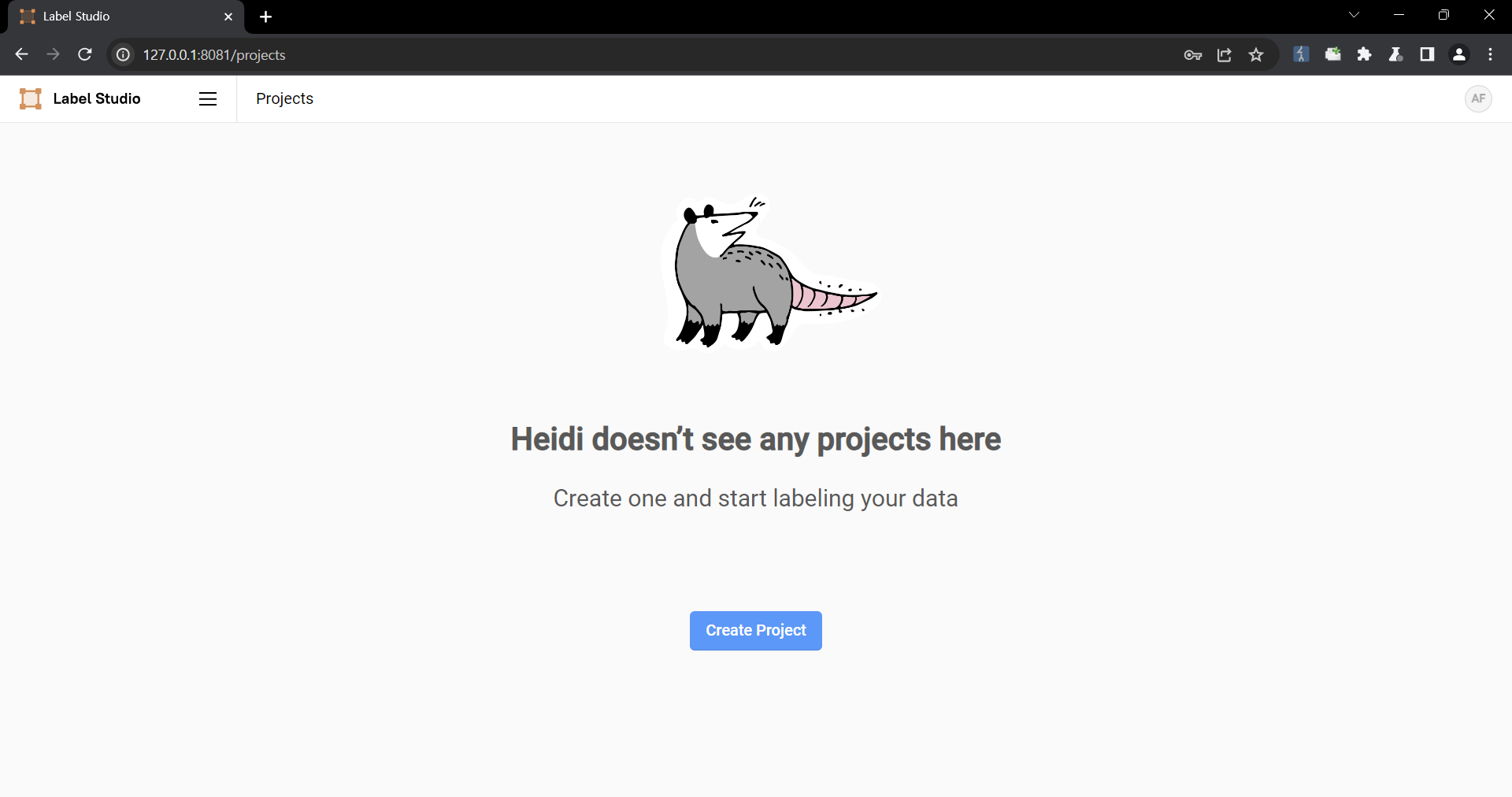
2. Upload a file containing the payload using the "Upload Files" function.
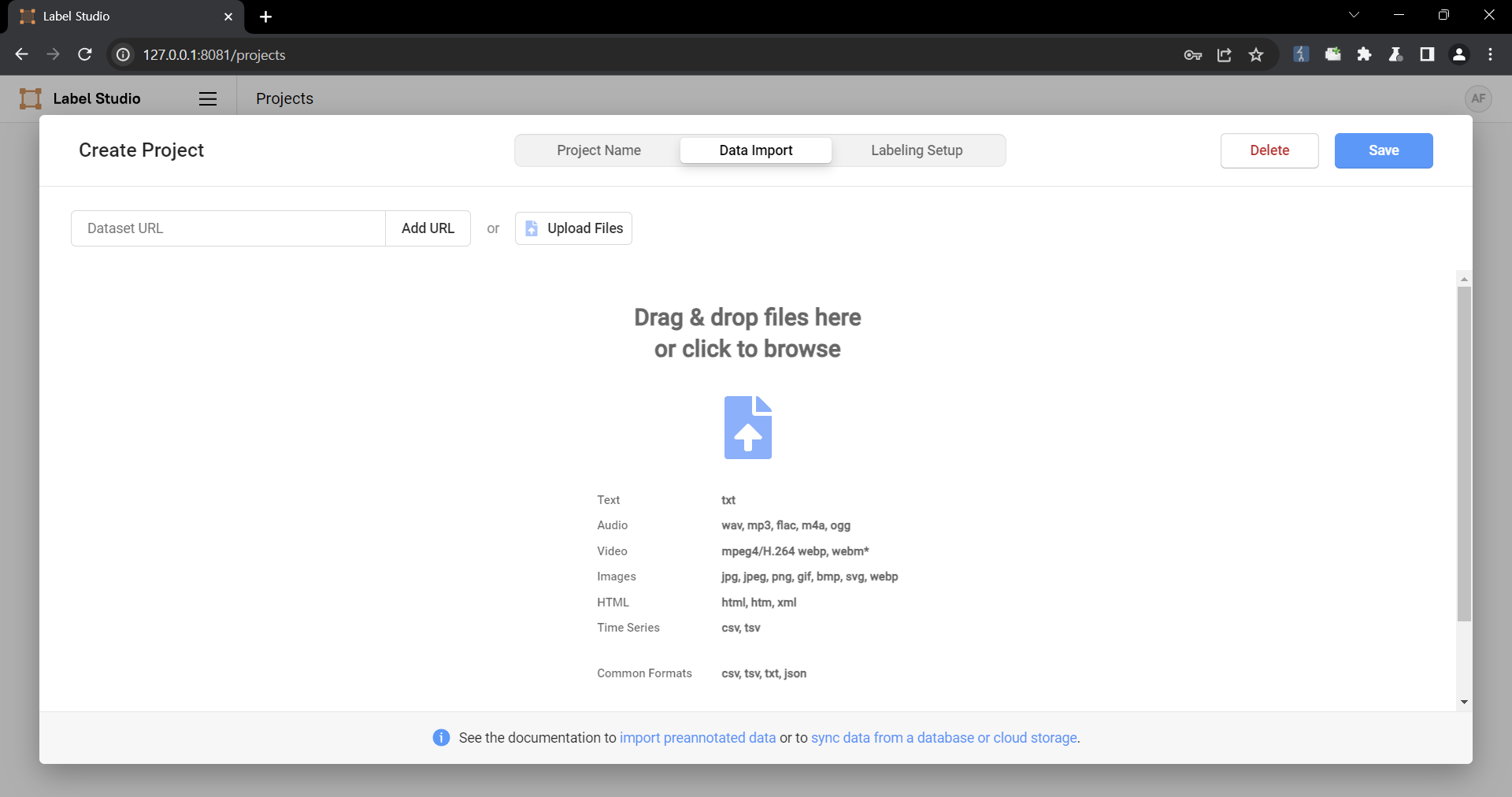
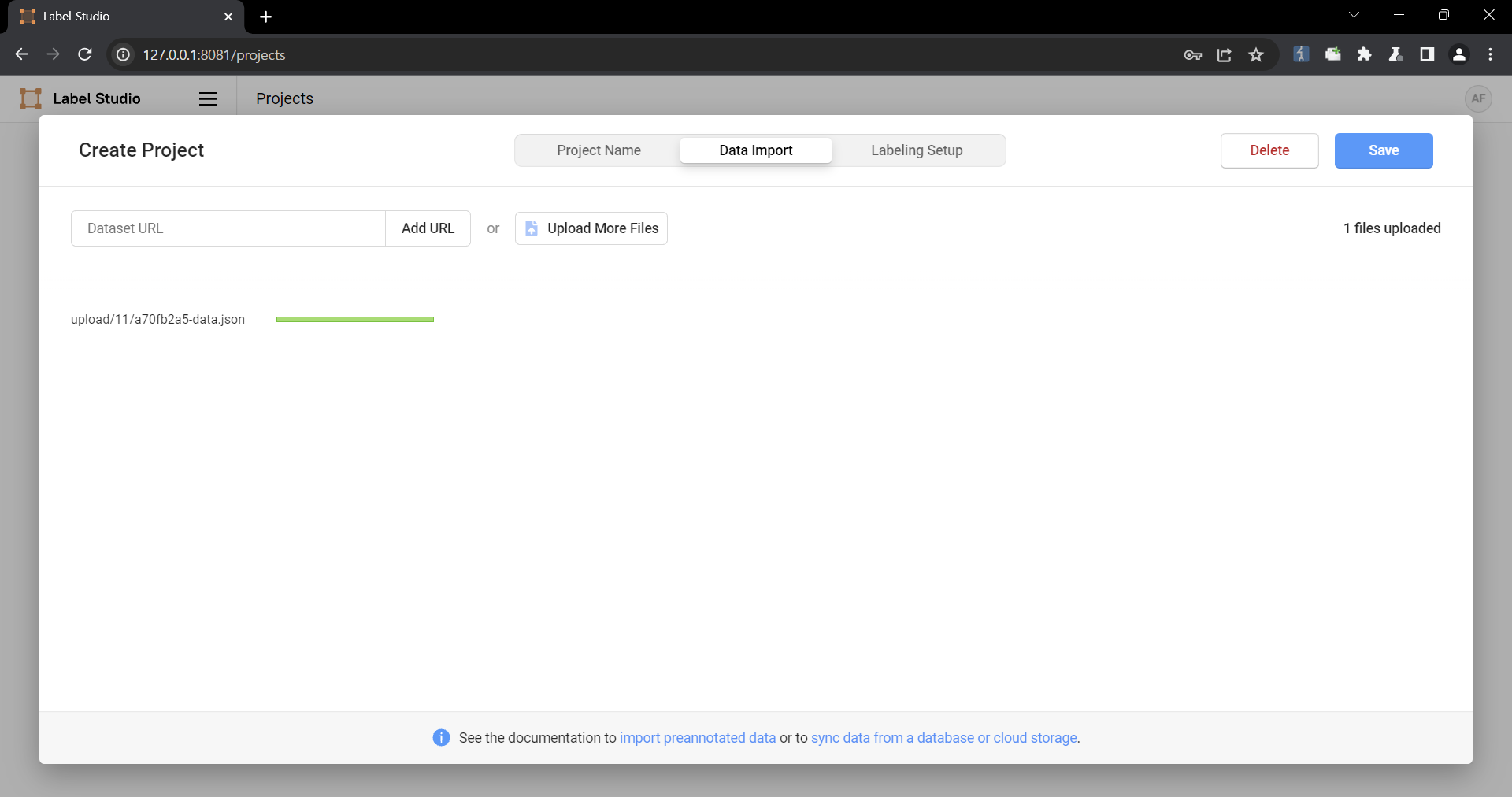
The following are the contents of the files used in the PoC
```
{
"data": {
"prompt": "labelstudio universe image",
"images": [
{
"value": "id123#0",
"style": "margin: 5px",
"html": "<img width='400' src='https://labelstud.io/_astro/images-tab.64279c16_ZaBSvC.avif' onload=alert(document.cookie)>"
}
]
}
}
```
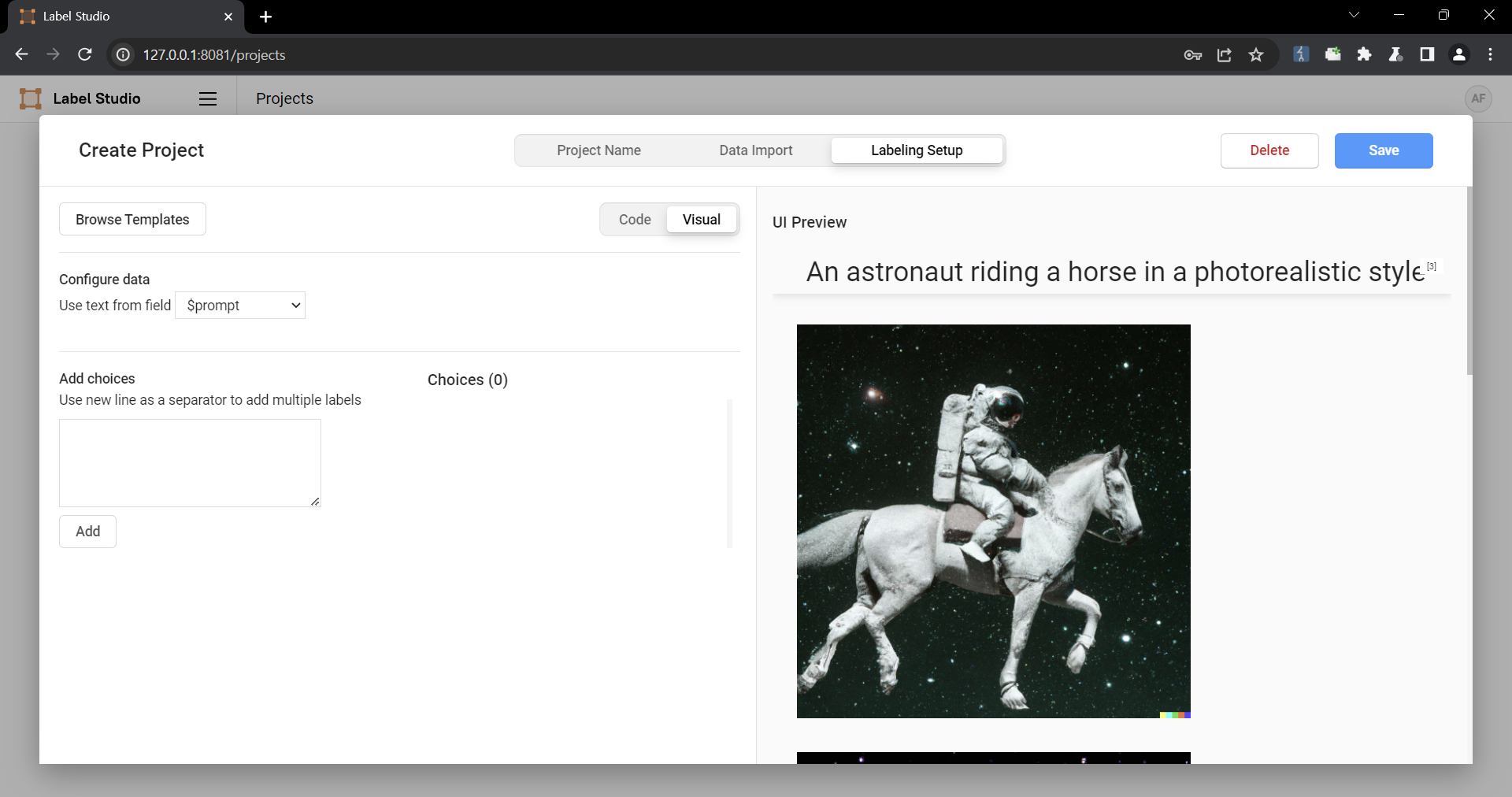
3. Select the text-to-image generation labeling template of Ranking and scoring
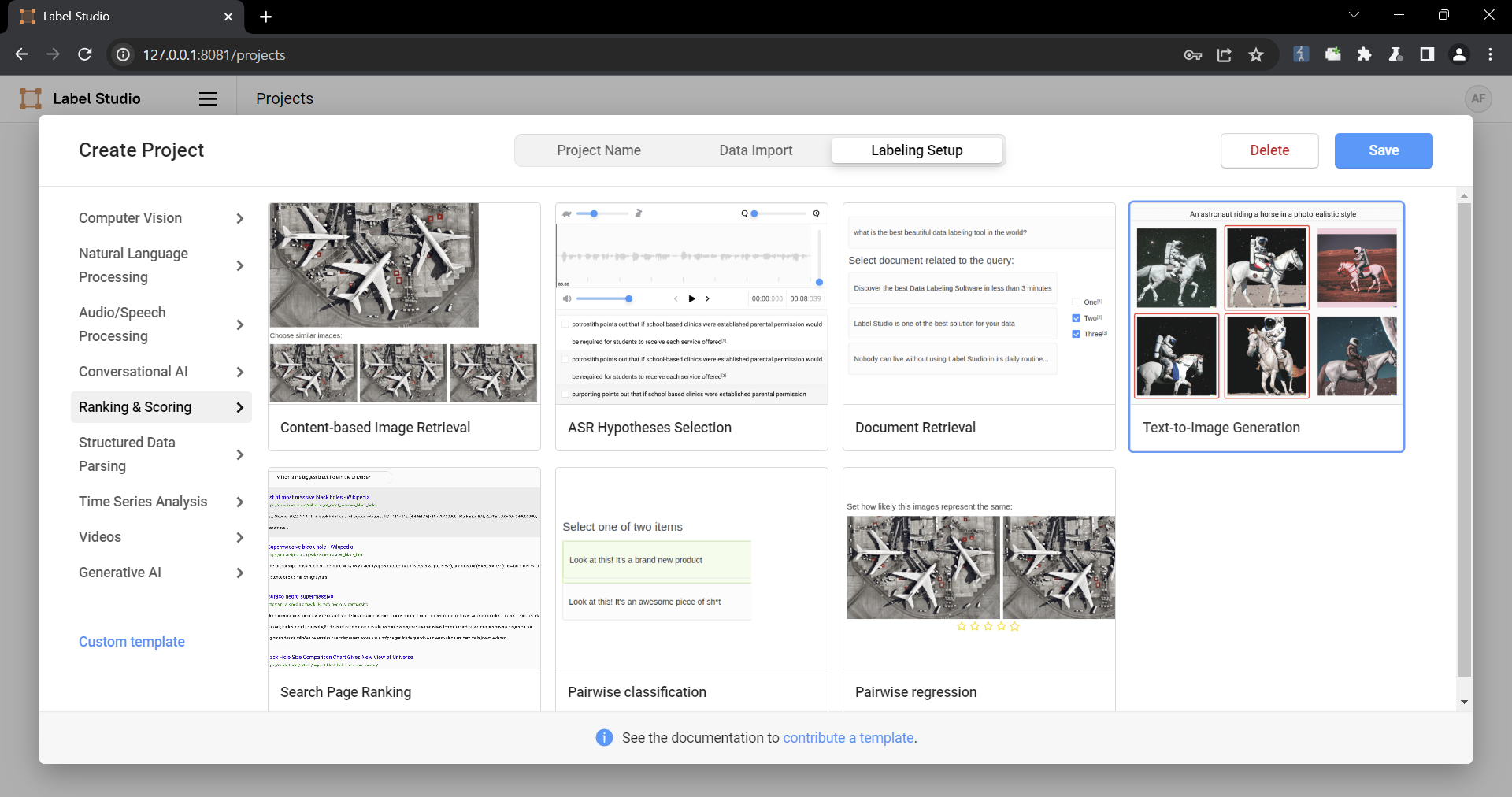
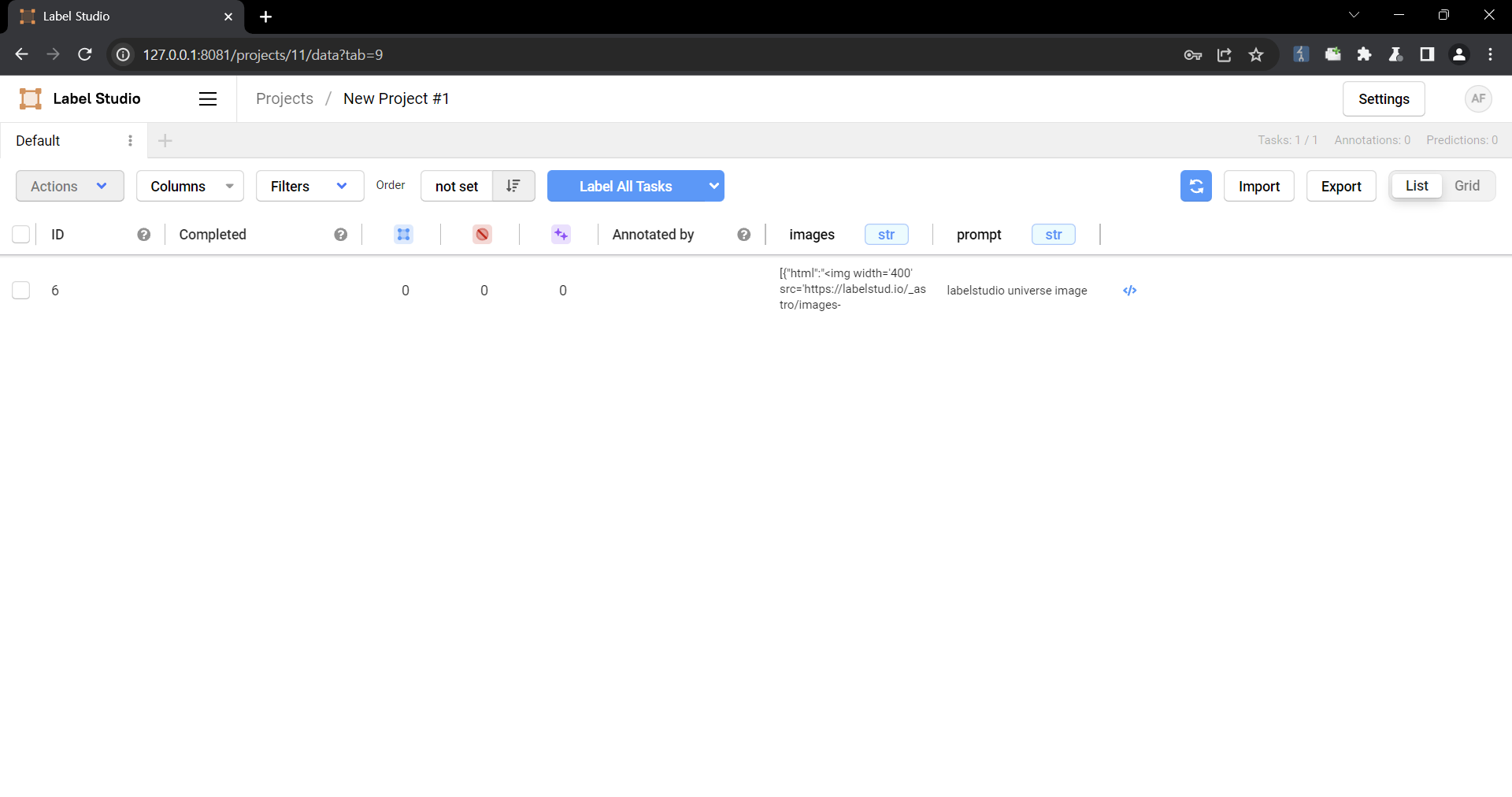
4. Select a task
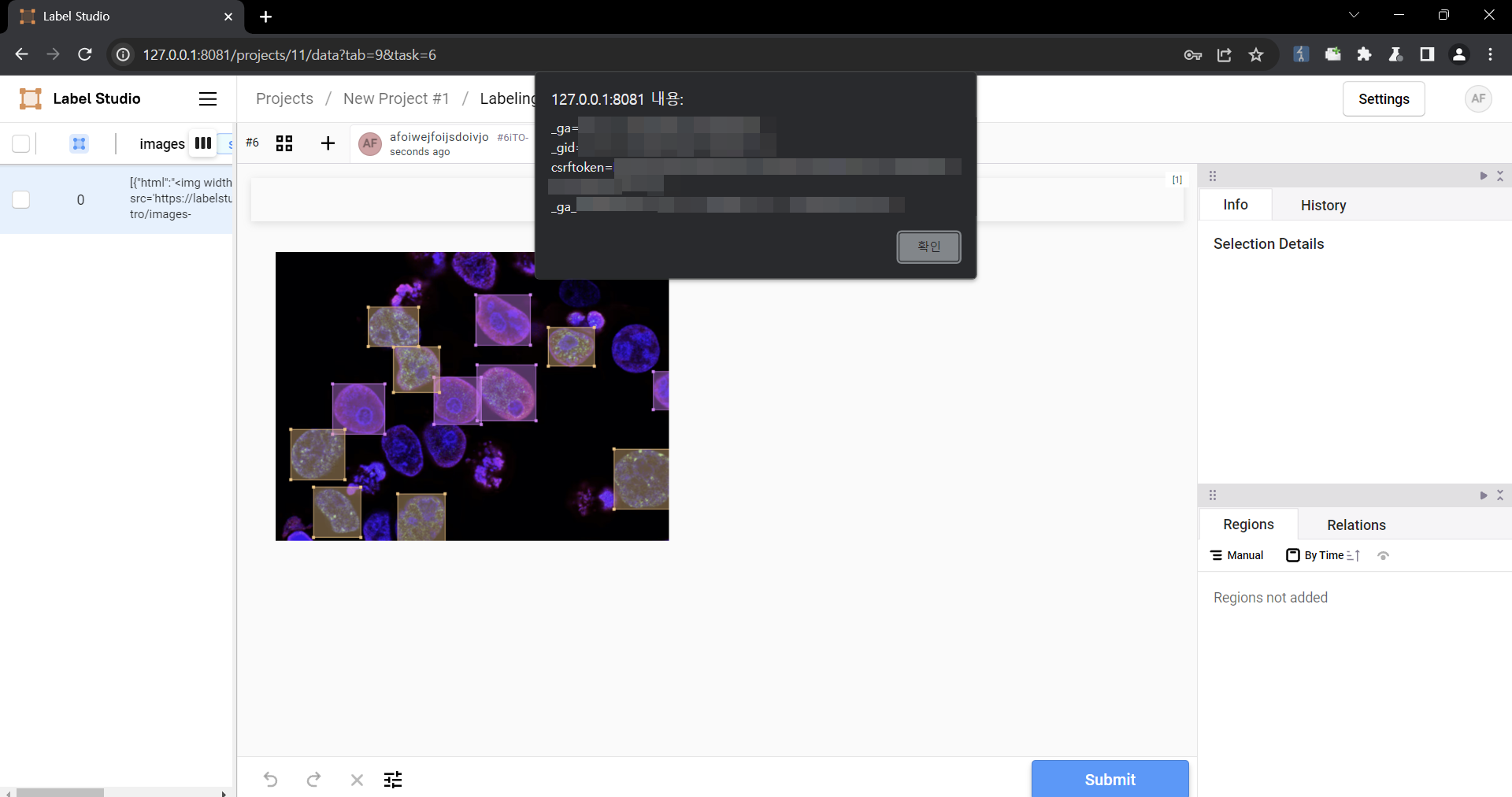
5. Check that the script is running
### Impact
Malicious scripts can be injected into the code, and when linked with vulnerabilities such as CSRF, it can cause even greater damage. In particular, It can become a source of further attacks, especially when linked to social engineering.
|
